
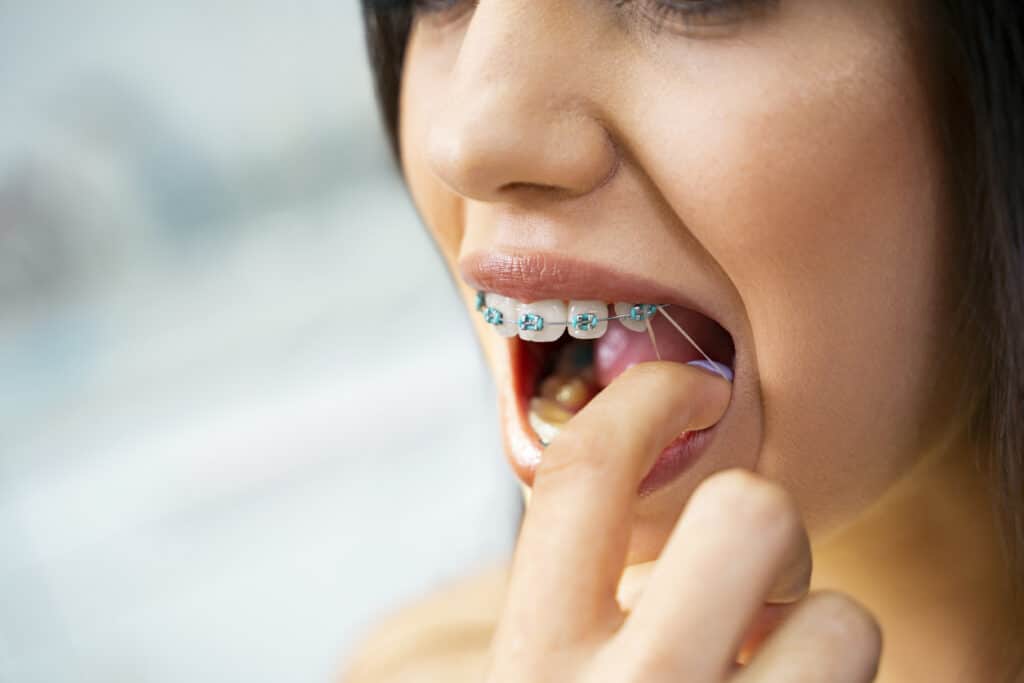
Rubber bands may be small, but they can play an important role in how your bite changes during braces treatment. At Advanced Orthodontic Care in Denver, CO, our braces treatment may include orthodontic elastics when certain teeth or bite relationships need more guidance. Dr. Jeff Birg is a certified specialist in orthodontics who completed his orthodontic specialty training and master’s degree at the University of Colorado.
What Do Orthodontic Rubber Bands Do?
Braces use brackets and an archwire to place steady pressure on the teeth. Small ligature elastics, sometimes called o-rings, help hold the archwire in place. Other rubber bands stretch between selected upper and lower teeth to apply pressure in a specific direction.
These interarch elastics can help improve how the upper and lower teeth fit together. The attachment points vary from one patient to another because each bite requires different movements. We choose the placement based on what your teeth and bite need rather than using the same setup for everyone. This is one part of the individualized planning involved in orthodontic treatment.
Why Consistent Wear Matters
Elastics only work while they are applying the prescribed pressure. If you wear them less often than directed, bite correction may take longer or progress less predictably. Missing a few hours does not mean you should double up later. Adding extra bands or changing where they attach can apply too much force or move the teeth in a direction we did not intend.
The same rule applies whether you have traditional metal braces or ceramic braces. Follow our instructions for where to place the bands, how often to wear them, and when to replace them. If you forget the setup or are unsure what to do after missing wear time, contact our team instead of guessing.
What If a Rubber Band Breaks or Feels Uncomfortable?
A broken elastic is usually easy to replace if you have extras and know your prescribed pattern. Let us know if you run out, bands keep snapping, or discomfort feels different from the usual pressure you notice during treatment.
Problems such as a loose bracket, poking wire, or damaged appliance may need separate attention. Our emergency orthodontic care page explains which issues may require a call to the office.
Keep Your Braces Treatment on Track in Denver
Wearing your elastics as prescribed helps keep bite correction moving in the direction we planned. If you have questions about rubber bands, braces, or a change in how your appliance feels, contact us at Advanced Orthodontic Care in Denver, CO. Dr. Jeff Birg and our team can review your instructions and help you stay on course. Call 303-331-0222.