
Orthodontists Serving Denver, Cherry Creek, & Nearby Areas Of Colorado
A confident smile can make a lasting impression – but if your teeth or bite are misaligned (malocclusion), it can affect more than just appearance. For generations, braces have helped patients achieve healthier, straighter smiles, and today’s orthodontic options are more comfortable and versatile than ever.
Founded in 1999, Advanced Orthodontic Care is led by experienced orthodontists Dr. Robert Rudman (Retired) and Dr. Jeff Birg, who are committed to delivering outstanding results. We offer modern orthodontic treatments for children, teens, and adults in the Denver area.
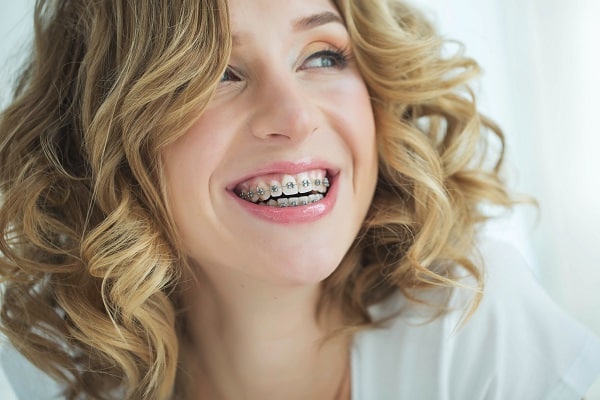
Are Braces Right for You?
Braces address various types of malocclusion:
- Crooked teeth
- Crowded teeth
- Gaps between teeth
- Open bite
- Cross bite
- Over bite
- Under bite
Malocclusion is very common. Even if your teeth look mostly straight, the way the jaws come together may be unbalanced or not fully aligned, which can lead to issues with the comfort of your bite.
A bad bite can increase your risk of several problems:
- Jaw soreness
- Straining of the muscles, ligaments, and nerves associated with the jaws and face
- Abnormal or uneven wearing of your teeth enamel
- Discomfort while chewing
- Difficulties with speech
- Tooth decay
- Gum disease
- Tooth loss
Braces not only create beautiful smiles but also address the functional and health-related issues outlined above.
Dr. Rudman (Retired) and Dr. Birg will use X-rays, photos, and an exam to assess your bite and the straightness of your teeth. If they determine you can benefit from braces, they will explain all of the types that will work for you.
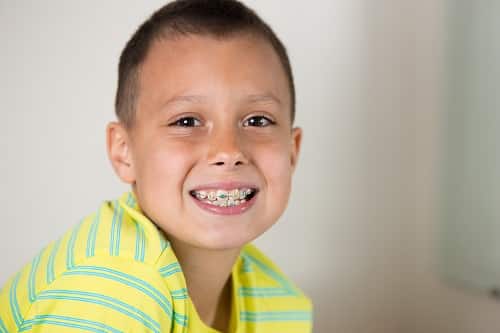
Types of Braces
In this day and age, there is more than one option when it comes to braces:
- Traditional metal braces. These are the braces that may come to mind first. Metal brackets and wires gradually move the teeth into the desired alignment. Rubber bands are used in various configurations to exert force on the brackets. You can choose colorful, clear, or tooth-colored rubber bands to personalize your braces.
- Clear or “ceramic” braces. These braces work the same way as the metal kind, but the brackets are clear. They blend with your teeth’s color and offer a less visible option. The wires are metal, and you can choose clear, tooth-colored, or colorful rubber bands.
- Invisalign®. Just like braces, Invisalign works by applying pressure to the teeth. Unlike braces, there are no brackets or wires. Instead, you wear custom-made plastic aligners over your teeth, similar to a mouth guard. Each aligner is shaped to move the teeth as planned. You remove Invisalign to eat and to brush, and most people won’t know you are wearing them.
Dr. Rudman (Retired) and Dr. Birg can show you examples of these choices and answer any questions you have about treatment length, comfort, results, cost, and any other questions to help you make your decision.
Braces for Adults
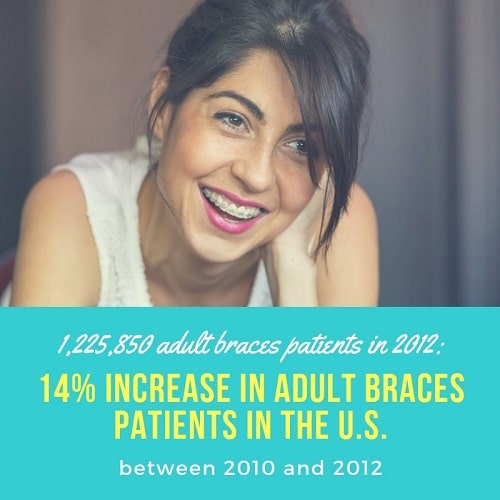
An increasing percentage of orthodontic patients today are adults. Whether you’ve never worn braces or had them previously, treatment as an adult can create the smile you want and healthy, straight teeth that will serve you well in the decades ahead.
Adult braces patients report several benefits of treatment:
- Improved confidence at work
- Feeling better about their smiles in social interactions
- Posing for photos without covering their teeth or pressing their lips together
- Decreased discomfort and strain from an unbalanced bite
Even if you had braces as a teen, your teeth may have relapsed to their former positions. Perhaps you lost your retainer at some point, and your teeth are crooked again.
There are many reasons adults seek braces, and Dr. Rudman (Retired) and Dr. Birg can help you decide whether a low-profile option like Invisalign will work or if you prefer the traditional route. Seeing people in their 20s, 30s, 40s, 50s, and beyond with metal wires and brackets is not at all uncommon these days.
How Braces Work
Braces move teeth over time by applying constant pressure to the tooth and its root. As the root moves, the bone around it grows and adapts to hold the new position.
There are four basic parts to conventional braces:
- Brackets attached to each tooth
- A bonding material that attaches the bracket to the tooth’s surface
- A thin metal arch wire that runs from bracket to bracket and puts pressure on the teeth
- The ligature elastic or “o-ring,” a rubber band that joins the bracket to the arch wire
The small o-ring rubber bands around each bracket help the archwire apply steady pressure to move your teeth. Without them, the brackets and wires would not function properly.
Depending on your treatment plan, these bands may be arranged in specific patterns — such as criss-cross — to guide certain movements. Other elastics, including connected “power chains” or bands worn between the upper and lower teeth, may also be used to correct bite alignment.
Each type of elastic plays an important role in achieving the precise results Dr. Rudman (Retired) and Dr. Birg have mapped out for your smile.
Dental Hygiene with Braces
Great dental hygiene is always important, including while you are wearing braces. The brackets and wires can easily trap food and sugar, so they could sit on your enamel for a while if you don’t brush.
Without braces, poor dental hygiene leads to cavities. This can also happen with braces, with the additional risk of “white stain lesions,” which are white spots caused by plaque buildup around brackets. These white stains are almost impossible to remove once they have formed.
How to Brush With Braces
Your brushing technique is largely the same with braces. You’ll hold the bristles at an angle and brush above the wires, then below the wires, so that all areas are cleaned. Use soft bristles and gentle pressure, as you normally would.
With braces, brush at least 3 times daily to avoid the accumulation of food particles on your teeth and braces:
- In the morning, after breakfast
- After lunch or right after school
- At bedtime
You will need to replace your toothbrush more often due to your appliances. As soon as the bristles start to wear down or fray, replace your toothbrush.
How to Floss With Braces
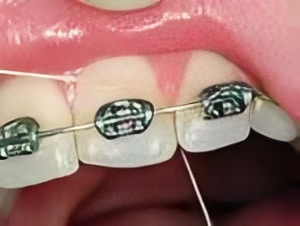
For areas between the teeth that a toothbrush can’t reach, use dental floss to remove food particles and plaque. Flossing takes more time and patience when you are wearing braces, but it is important to floss your teeth every day.
Use the reusable floss threader provided by our office to floss under your archwire daily. Pull a small length of floss from the dispenser through the threader and slide it up and down along the front of each tooth. Use care around your archwire; do not floss too forcefully or apply too much pressure. After you floss between your archwire and braces, floss between your other teeth and gums. Floss at night to keep your teeth clean before you go to bed.
When you get your braces, we’ll make sure you know how to brush and floss correctly before sending you on your way. We’ll also provide you with dental wax, which can be applied to any parts of your braces that are poking or rubbing your cheek or gums.
Foods to Avoid with Braces
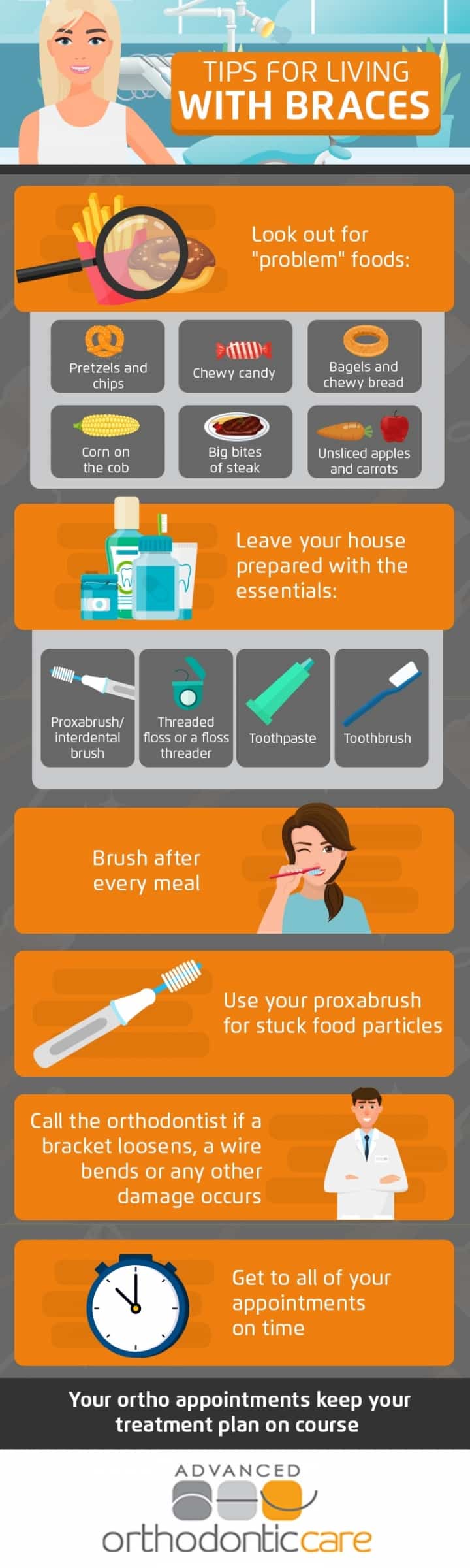
You can eat most of the same foods with braces, though a few exceptions apply. Some foods will need to be cut into smaller pieces, while others will need to be avoided altogether. The reason is that certain foods can bend archwires and dislodge brackets. These things require additional appointments for repairs and may lengthen your treatment time.
Common sense can be used in most cases. We’ll provide you with a list of the main culprits behind braces breaking. In general, hard and sticky foods are the ones to look out for, as well as any foods that seem likely to get stuck (like popcorn).
Here are some examples of sticky or chewy foods to avoid:
- Caramels
- Candies
- Chewy bagels
- Crusty bread
- Caramel apples
- Taffy
- Sugared gum
There are also hard/tough foods you cut into very small bite-size pieces:
- Apples
- Steak
- Roast
- Carrots
These items should be avoided altogether:
- Ice cubes
- Hard taco shells
- Tortilla chips
- Corn on the cob
- Potato chips
- Chewy candy
- Chewy pizza crust
- Crunchy nuts
Why Choose Advanced Orthodontic Care for Braces in Denver, CO?
Advanced Orthodontic Care offers specialized braces treatment backed by decades of experience. Dr. Robert Rudman (Retired) and Dr. Jeff Birg each hold a D.D.S. and a Master of Science in orthodontics, reflecting advanced training focused specifically on straightening teeth and correcting bite issues.
Here, patients benefit from time-saving technology, including indirect bonding for faster, more precise bracket placement and an in-house lab that reduces appointment time. Our practice also provides flexible scheduling through a convenient online portal and paperless account management. With multiple treatment options and flexible payment plans, the team is committed to delivering confident, healthy smiles in Denver, CO.

Questions About Braces
How long do braces typically need to be worn?
It depends on the state of your bite, the movements required, your age, the braces you choose, and other factors. Rest assured, we will provide a timeline estimate at your consultation so you know what to expect. It could be anywhere from 6 months to several years. Most people require between 1 and 3 years. Patients report it’s worth it when they see their straightened, pretty smile once treatment is complete.
Will my braces cause pain?
Braces can cause soreness, which varies from patient to patient. This typically occurs on the first full day after your wires and rubber bands are changed, as they may be tighter and/or in a different configuration than before, and the teeth will start moving again. The vast majority of people find adequate relief in an over-the-counter pain medication like ibuprofen, and the soreness should go away after a day or two.
How old do you need to be to have braces?
There is no upper age limit for braces. Your teeth and bite are important throughout your whole life. While many adults feel hesitant at first, once their treatment is complete, they are ecstatic to see their new smiles.
Can I Play Sports With Braces?
Yes, but we encourage you to wear a mouth guard when playing any sport.
How Long Do You Have to Wear Braces?
The average patient typically has to wear braces for at least 18 to 24 months. However, there are cases in which a patient may need to wear them for longer periods. This depends on the condition of their teeth and the severity of their dental problems
Do I Have to Brush My Teeth More With Braces?
Although you should always keep your teeth clean, you can continue to brush them at least twice a day for 2 minutes each time. Since you are wearing braces, it is highly recommended that you brush your teeth after every meal. This way, you can remove any loose food that could be stuck in your braces.
Do I Still Need Dental Checkups With Braces?
Yes, you will need routine dental checkups to ensure the braces are working properly. In addition, it is also necessary to have more dental checkups when wearing braces because dentists can remove food particles that you cannot reach with regular brushing. A dentist can also make minor adjustments to your braces if they find a problem.
How Much Do Braces Cost in Denver?
The cost of braces in Denver varies depending on the type of appliance you choose, the complexity of your case, and the length of treatment. Traditional braces are generally the most budget-friendly option, while ceramic braces tend to cost more.
During your consultation at Advanced Orthodontic Care, Dr. Rudman (Retired) or Dr. Birg will review your specific needs and provide a personalized estimate. We also discuss financing and payment plan options to help make treatment manageable.
Does Dental Insurance Cover Braces or Invisalign in Denver?
Many dental insurance plans include orthodontic benefits to help offset the cost of braces. Coverage varies widely, though. Some plans cover a percentage of treatment fees, others offer a fixed lifetime maximum benefit for orthodontics, and some cover only certain types of appliances.
At Advanced Orthodontic Care, we’ll review your insurance benefits with you and help file claims on your behalf. If orthodontic coverage is limited, we can also explore alternative payment arrangements so you can pursue the treatment that fits your goals
Are Braces or Invisalign Better for Me?
Braces and Invisalign both straighten teeth, but they differ in design and wear. Teens and adults often choose Invisalign for its discreet appearance and ease of hygiene, while braces are a strong choice for more involved orthodontic issues. At Advanced Orthodontic Care, our orthodontists explain both options and help determine which will best address your alignment needs.
What Should I Do if a Bracket or Wire Breaks Between Appointments?
It’s not uncommon for a bracket or wire to loosen or break between visits, especially after eating hard or sticky foods. If this happens, call Advanced Orthodontic Care for guidance. Depending on the situation, you may be advised to gently reposition the wire with a clean cotton swab, cover a poking piece with orthodontic wax, and come in for a repair.
Our office team can often fit you in quickly so the appliance can be restored and your treatment stays on track. Prompt attention helps avoid discomfort and delays.
How Often Will I Need Orthodontic Adjustments During Braces Treatment?
With braces, regular adjustments are necessary to keep your treatment progressing. Typically, patients visit the orthodontist every 4-8 weeks for tightening, wire changes, and monitoring of tooth movement. The exact frequency depends on your individual plan and how your teeth are responding.
Routine adjustments and check-ins ensure treatment stays efficient and comfortable. If you experience discomfort between appointments, you can always reach out for advice.
Schedule Your Consultation For Braces in Denver, CO
Ready to find out if braces are right for you? To schedule a FREE consultation with experienced Denver orthodontists Dr. Robert Rudman (Retired) and Dr. Birg, please call Advanced Orthodontic Care at at 303-331-0222.